
What is a learning support plan? Your complete guide
What is a learning support plan? Your complete guide

Many educators and parents assume that a learning support plan is a single, universal document, when in reality, the term covers a range of plans with different legal statuses, purposes, and structures depending on the country, jurisdiction, and individual student needs. Understanding what is a learning support plan, and which type applies to a given student, is not a bureaucratic exercise. It is the difference between a child receiving the right support and one who falls through the cracks of a system that meant well but planned poorly.
Table of Contents
- What exactly is a learning support plan?
- Types of learning support plans and legal frameworks worldwide
- Planning and reviewing learning support plans effectively
- Why family and student involvement strengthens learning support plans
- Why conventional thinking about learning support plans can hold schools back
- Streamline learning support planning with Qwixl’s smart software
- Frequently asked questions
Key Takeaways
| Point | Details |
|---|---|
| Learning support plans defined | They set student learning goals, needed adjustments, and detailed strategies to meet diverse educational needs. |
| Varied plan types | Different plans like ILPs, IEPs, 504 plans, and CSPs serve distinct purposes with some legally mandated. |
| Ongoing review cycles | Effective plans require continuous monitoring and timely reviews, ranging from 5 weeks to annually depending on context. |
| Family and student role | Active family and student involvement enhances plan relevance and success. |
| Dynamic application | Viewing plans as live, adaptable tools integrated into daily teaching improves student outcomes and compliance. |
What exactly is a learning support plan?
At its core, a learning support plan is a structured, written document that identifies a student’s learning goals, describes their strengths and preferences, and outlines the specific adjustments, strategies, and resources the school will provide to help them succeed. The learning support plan definition holds broadly across regions, even when the name changes: individual learning plan (ILP), education support plan, or additional support plan all share this foundational purpose.
According to the Raising Children Network, an individual learning plan “is a document that outlines a student’s learning goals for the school year and describes how the school will help the student achieve them.” That definition captures the essential function: a plan is both a goal-setting tool and a commitment from the school to act.
Most learning support plans for students include the following components:
- Student profile: Current levels of performance, diagnosed or identified needs, learning preferences, and areas of strength
- Goals: Specific, measurable learning objectives tied to academic, social, or functional areas
- Strategies and adjustments: Teaching methods, environmental modifications, assistive technology, or curriculum adaptations
- Roles and responsibilities: Who delivers what support, including classroom teachers, specialists, and families
- Progress monitoring: How and when progress will be assessed and documented
These plans are rarely developed by a single person. Involving families in learning plans and drawing on collaborative planning benefits from across the school team is widely recognized as essential to producing a plan that is both accurate and actionable.
Now that we understand what learning support plans are, it is important to explore how different systems categorize and implement these plans.
Types of learning support plans and legal frameworks worldwide
The most significant source of confusion around learning support plans is that the same student might qualify for very different documents depending on where they live. The legal weight, content requirements, and funding implications vary considerably, and mixing up plan types can lead to students receiving inadequate or mismatched support.
In the United States, two primary frameworks apply to students with disabilities. An IEP vs. 504 plan distinction matters enormously in practice: an Individualized Education Program (IEP) includes specially designed instruction tailored to the student’s disability-related needs, while a 504 plan focuses on removing barriers through accommodations such as extended time or preferential seating, without altering the curriculum itself. Understanding what is an individualized education plan is critical for any educator working within the U.S. system, because IEPs carry specific legal obligations under the Individuals with Disabilities Education Act (IDEA).

In Scotland, the landscape is different again. Scotland’s co-ordinated support plan (CSP) is a legally required document for children with significant additional support needs arising from complex or multiple factors, and it must be reviewed at least annually. This statutory status means that failure to produce or review a CSP is not merely poor practice; it is a legal failure.
| Plan type | Jurisdiction | Legal status | Key feature |
|---|---|---|---|
| IEP | United States | Statutory (IDEA) | Specially designed instruction |
| 504 Plan | United States | Statutory (Section 504) | Accommodations only |
| CSP | Scotland | Statutory | Annual review required |
| ILP | Australia, Canada, others | Non-statutory (varies) | Flexible goal-setting |
| EHCP | England | Statutory | Funding and provision detail |
Pro Tip: Before developing any plan, confirm its legal category in your jurisdiction. A non-statutory ILP and a statutory CSP or IEP require very different levels of documentation, review frequency, and multi-agency involvement.
For students who have not yet received a formal diagnosis but show clear signs of learning difficulty, supporting undiagnosed SEN students through a non-statutory plan can still provide meaningful, timely support while formal assessment processes proceed.
Understanding these plan types and legal frameworks leads us to consider how planning and review processes actually work in schools.
Planning and reviewing learning support plans effectively
Knowing the learning support plan definition is only the starting point. The real work lies in how these plans are built, implemented, and kept current. Effective learning support strategies depend on a planning process that is genuinely collaborative and not treated as a one-time administrative task.
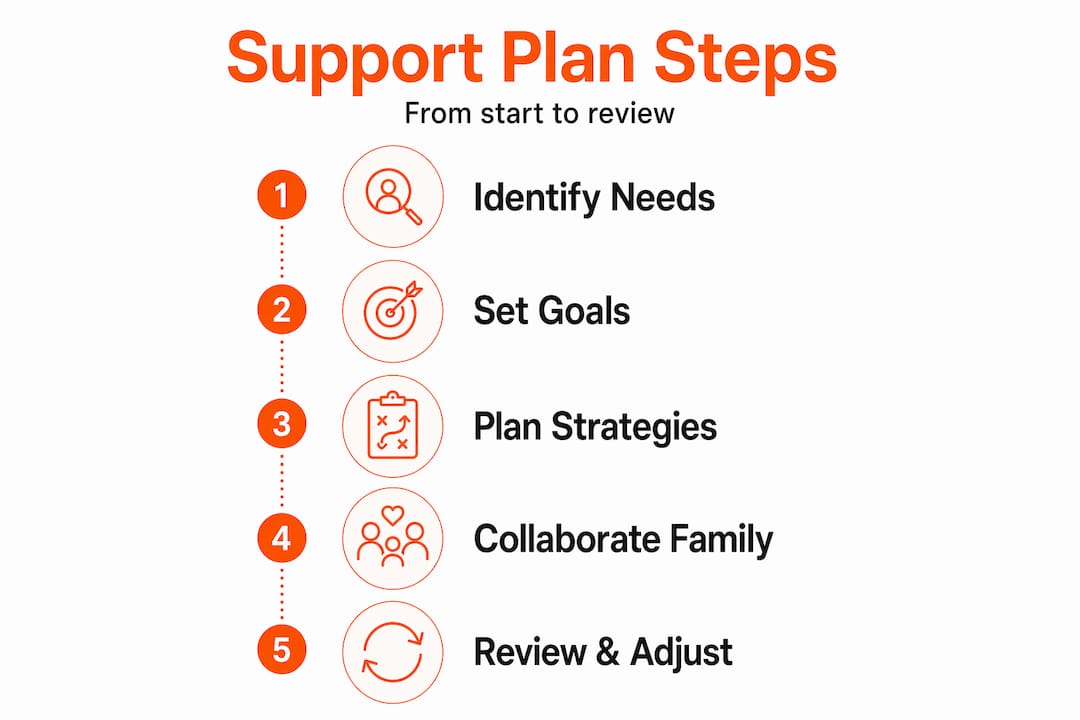
A well-structured planning process typically follows these steps:
- Gather baseline data: Use assessment results, teacher observations, and family input to establish the student’s current performance levels and identify priority areas.
- Convene a planning team: Bring together the classroom teacher, specialist staff (such as a SENCO or learning support coordinator), the family, and where appropriate, the student.
- Set specific, measurable goals: Goals should be achievable within the review period and linked directly to the student’s identified needs, not generic targets copied from a template.
- Assign responsibilities: Each strategy or adjustment should have a named person responsible for delivery, with realistic timelines.
- Implement and document: Begin support, keep records of what is being delivered, and note any early indicators of progress or concern.
- Review and revise: Assess progress against goals, consult with families and specialists, and update the plan accordingly.
Review frequency is a point where many schools underperform. ILPs can be reviewed on cycles as short as five weeks, which allows teams to catch problems early and adjust strategies before a student falls further behind. Statutory plans carry their own requirements: CSPs must be reviewed at least once every 12 months based on the plan’s anniversary date, a requirement that education authorities are legally bound to meet.
“A learning support plan that is not regularly reviewed is not a support plan. It is a record of good intentions.”
Family involvement in learning plans at the review stage is as important as at the initial planning stage. Families often hold information about changes in the student’s home environment, health, or emotional state that directly affects learning, and that information rarely reaches school through formal channels unless families are actively invited to contribute. Consulting best practices for plan reviews can help teams structure review meetings that are genuinely productive rather than perfunctory.
Pro Tip: Schedule review meetings at least two weeks in advance and send families a brief summary of the student’s progress beforehand. This gives parents time to prepare meaningful contributions rather than reacting to information in the moment.
Having seen the broad landscape of learning support plans and their review processes, let us explore why collaboration with families and students matters deeply.
Why family and student involvement strengthens learning support plans
One of the most consistent findings in educational research is that the importance of learning support plans is closely tied to the quality of family and student engagement in their development. Plans written without this input tend to reflect the school’s perspective alone, which is partial at best and inaccurate at worst.
The benefits of a learning support plan increase significantly when families are treated as genuine partners rather than passive recipients of information. Family involvement is not optional; it is essential in developing effective ILPs through the student support group (SSG) process, a structured meeting format used in Australia that brings together educators, families, and relevant specialists.
Meaningful family and student involvement produces several concrete outcomes:
- Greater accuracy: Families provide context about the student’s behavior, preferences, and challenges outside school that improves the plan’s relevance.
- Shared ownership: When families understand and agree with the goals, they are more likely to reinforce skills at home, extending the impact of school-based support.
- Student motivation: Students who have a voice in their own plan, particularly older students, report greater commitment to their goals and a stronger sense of agency over their learning.
- Reduced conflict: Transparent, collaborative planning reduces the likelihood of disputes between families and schools about whether appropriate support is being provided.
Family collaboration in support plans is something that schools can actively structure rather than leave to chance. Providing families with plain-language summaries of the plan, offering flexible meeting times, and using accessible communication tools all lower the barriers to genuine participation. Involving families and students from the earliest stages of planning, not just at the review stage, produces plans that are far more likely to be implemented consistently and to produce measurable progress.
Pro Tip: Ask students directly, using age-appropriate language, what helps them learn best and what makes learning harder. Even a brief student input form completed before the planning meeting can surface insights that transform the quality of the goals set.
With the foundational knowledge, legal context, process details, and collaboration benefits clear, let us now share fresh perspectives to deepen understanding.
Why conventional thinking about learning support plans can hold schools back
There is a persistent and damaging tendency in schools to treat learning support plans as administrative artifacts rather than living tools. The plan gets written, filed, and revisited only when a review date arrives or a parent raises a concern. This approach does not merely reduce the plan’s effectiveness; it fundamentally misunderstands what the plan is for.
Practitioners who treat legal review dates as integral parts of the plan rather than administrative afterthoughts demonstrate something important: calendar management is not bureaucracy. It is the mechanism that keeps a plan honest. A plan that has not been reviewed in 14 months for a student whose needs have changed significantly is not a support plan. It is a liability.
A second, equally serious problem is misclassification. Teams often confuse plan types, conflating the presence or absence of specially designed instruction with general accommodations. A student placed on a 504 plan when they require an IEP may receive extended time but not the specialized reading instruction they need. The distinction is not semantic. It determines the nature, intensity, and legal accountability of the support provided.
The learning plan vs. learning support plan distinction also matters more than many schools acknowledge. A general learning plan might outline curriculum goals for any student, while a learning support plan specifically addresses identified barriers and the school’s obligations to remove them. Treating these as interchangeable creates confusion about what the school has actually committed to.
What effective schools do differently is integrate the learning support plan into the daily rhythm of teaching. The goals are visible in lesson planning. The strategies are embedded in classroom practice. The review is not a separate event but a natural extension of ongoing monitoring. This approach, grounded in misconceptions about support plans being corrected through professional development, transforms the plan from a document into a practice.
Streamline learning support planning with Qwixl’s smart software
Developing, monitoring, and reviewing learning support plans across a whole school is demanding work, and the administrative burden often falls heaviest on the educators who are already most stretched. Qwixl was built specifically to address this challenge, providing tools that make evidence-informed planning more manageable without sacrificing rigor or personalization.

Qwixl’s platform captures behavioral and engagement signals from students’ writing and homework activity, giving teachers and SENCOs early, privacy-conscious indicators of learning difficulty that can inform plan development before needs escalate. Qwixl Homework supports real-time collaboration between teachers and families, making it easier to keep all stakeholders informed and engaged across review cycles. Qwixl for parents provides secure, accessible visibility into a child’s progress, so that families can contribute meaningfully to planning conversations rather than arriving at meetings without context. For schools managing complex caseloads, Qwixl reduces the friction between data collection and plan action.
Frequently asked questions
What is the main difference between an IEP and a 504 plan?
An IEP includes specially designed instruction tailored to the student’s disability-related needs, while a 504 plan provides accommodations to remove learning barriers without altering the curriculum or delivering specialized teaching.
How often do co-ordinated support plans (CSPs) require review in Scotland?
CSPs must be reviewed at least once every 12 months, with the review date aligned to the plan’s anniversary, making it a statutory obligation for education authorities.
Why is family involvement important in developing learning support plans?
Families provide critical context about a child’s strengths, challenges, and home environment, and family involvement is essential to developing effective plans through structured processes like the student support group, making goals more realistic and reinforcement at home more likely.
Can learning support plans be adjusted more frequently than annually?
Yes. Some schools use five-week review cycles to assess progress and adjust goals and strategies regularly, which is particularly valuable for students whose needs are changing quickly or whose initial goals prove too ambitious or insufficiently challenging.
Are all learning support plans legally required documents?
No. Scotland’s CSPs carry statutory status with legally mandated review duties, while many ILPs and non-statutory IEPs in other jurisdictions are best-practice documents without the same legal force, though they remain essential for effective educational planning.